Technology Consultant vs IT Consultant: What's the Difference?
If you're a business owner exploring outside expertise to strengthen your tech strategy, you've probably come across two similar-sounding titles: technology consultant and IT consultant. While they're often used interchangeably, the roles serve different purposes. Understanding this distinction can help you choose the right partner for your business, whether that's a technology consultant for businesses like Dhananjay Arora or a specialized IT consultant.
An IT consultant typically focuses on the technical backbone of a business — networks, hardware, software installations, cybersecurity, and troubleshooting. Their work is often reactive and operational: fixing what's broken, securing what's vulnerable, and keeping systems running smoothly day to day. IT consultants are essential when a business needs help with server management, data backups, software updates, or resolving technical issues quickly.
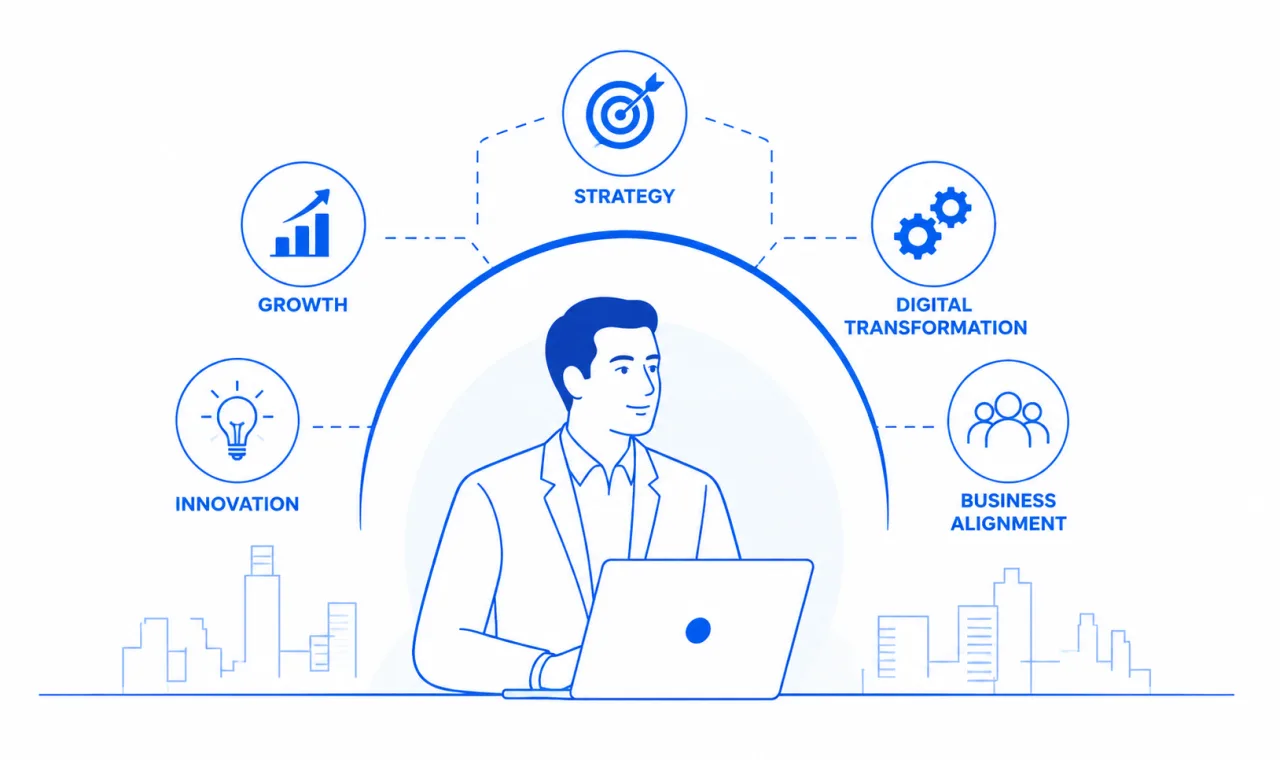
A technology consultant, on the other hand, takes a broader, more strategic view. Rather than just maintaining systems, a technology consultant for businesses helps organizations align their technology investments with long-term goals. This includes digital transformation planning, evaluating emerging tools like AI and automation, streamlining workflows, and advising leadership on how technology can drive growth, efficiency, and competitive advantage.
Dhananjay Arora, as a technology consultant, works closely with business owners and decision-makers to identify where technology can create the biggest impact — not just solving today's problems, but preparing the business for tomorrow's challenges.
Scope of Work IT consultants generally handle technical implementation and support. Technology consultants focus on strategy, planning, and business alignment.
Approach IT consulting tends to be reactive, addressing issues as they arise. Technology consulting is proactive, anticipating future needs and opportunities.
Focus Area IT consultants concentrate on infrastructure — networks, devices, and security. Technology consultants concentrate on business outcomes — growth, innovation, and competitive positioning.
Client Interaction IT consultants often work with technical teams and support staff. Technology consultants typically engage with founders, executives, and leadership to shape overall direction.
Time Horizon IT consulting solves immediate, short-term problems. Technology consulting builds long-term roadmaps for sustained success.
Which One Does Your Business Need?
If your business is struggling with day-to-day technical issues — slow systems, security gaps, or software glitches — an IT consultant can provide quick, effective solutions. But if you're looking to future-proof your business, integrate new technologies strategically, and make smarter decisions about where to invest your tech budget, a technology consultant for businesses is the better fit.
Many growing businesses eventually need both: a technology consultant to set the vision and strategy, and IT support to execute and maintain it. The key is recognizing which stage your business is at and what kind of guidance will move you forward.
Partner with Dhananjay Arora
Choosing the right consultant isn't just about fixing problems — it's about setting your business up for sustainable growth. As a technology consultant for businesses, Dhananjay Arora helps organizations bridge the gap between everyday operations and long-term innovation, ensuring technology becomes a driver of success rather than just a support function.
If you're ready to move beyond reactive IT fixes and build a real technology strategy, working with an experienced technology consultant could be the smartest step your business takes this year.